Welcome back to our weekly journey discovering the most fascinating fortresses in the province of Catania. After admiring the Stupendous Frederician grandeur of Castello Ursino and the volcanic spectacle of Aci Castle perched on the sea, for this Chapter 3 we move inland, towering high over the fertile Simeto Valley.
Get ready to climb up to Paternò to explore one of the most imposing and best-preserved medieval keeps in all of Sicily.
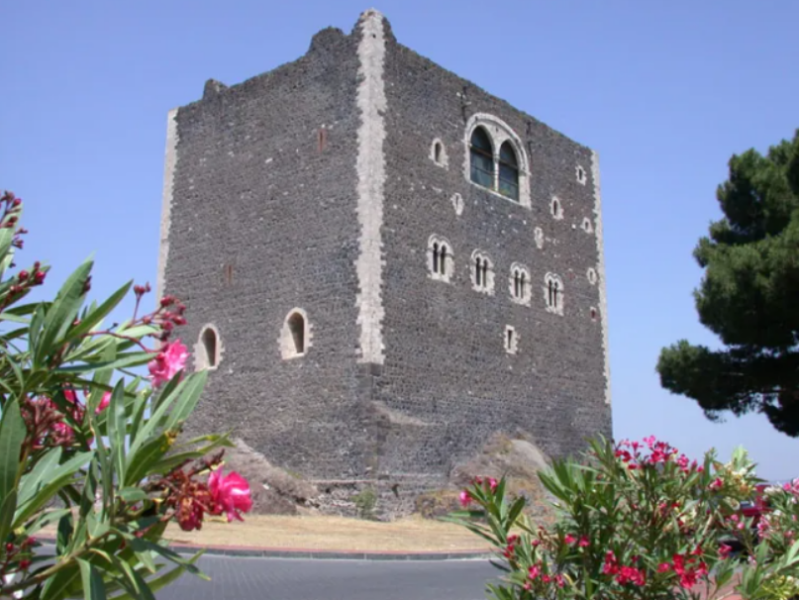
3. The Norman Castle of Paternò: The Stern Guardian of the Simeto Valley
Perched on a hill of basaltic rock that dominates the town of Paternò and the entire surrounding valley, the Norman Castle is a masterpiece of medieval military architecture. Unlike other fortresses born from stratifications of different eras, this building was designed and built by the Normans in a single, grandiose construction phase.
The History: The Stronghold of the Counts of Sicily
The construction of the castle was commissioned by Great Count Roger I of Hauteville around 1072, immediately after the Norman conquest of Sicily, with the strategic goal of controlling the Simeto River and the main communication routes connecting the coast to the agricultural hinterland. Over the centuries, the fortress became an important feudal garrison, belonging to illustrious families such as the Ventimiglias, the Moncadas, and the Paternòs. Curiously, in subsequent years it lost its purely military function to transform into a noble residence and, in modern times, was even used as a private home and storage depot, before being restored as a monumental asset.
The Architecture: A Block of Stone Defying the Centuries
The castle presents itself as a massive parallelepiped made of blocks of lava stone and sandstone, characterized by a rigorous severity and geometry typical of Norman fortifications:
-
Internal Division: It is spread over three levels. The ground floor was intended for warehouses and cisterns; the first floor housed the reception rooms and the magnificent Royal Chapel (decorated with splendid medieval frescoes); the top floor was reserved for the lord's quarters and the guard.
-
Bifora Windows: The elegant double-mullored windows opening onto the lava stone walls soften the massive structure, offering plays of light and a spectacular viewpoint towards Etna and the plain.
Practical Information for Your Visit
If you want to organize a trip to discover this extraordinary Norman manor, here is useful information:
-
What it hosts today: The castle can be visited and inside it preserves museum sections that tell the story of the site, in addition to showcasing the splendid frescoes of the internal chapel. From the roof terrace, you can enjoy a 360-degree panorama that amply rewards the climb.
-
Opening Hours: Generally managed by local associations or cultural bodies in collaboration with the Municipality, it is open to the public on weekends or by reservation for groups and school classes (it is always advisable to check updated times before setting off).
-
Tickets: Access requires an economical admission ticket.
-
Practical Tips: It is located in the high and ancient part of the city (the historical hill). It is advisable to wear comfortable shoes to explore the surroundings of the hill and the historic streets of the village below.
A chapter that reminds us how much the history of Sicily is tied to its rivers, its valleys, and the extraordinary construction skill of past centuries. Next Monday our column continues: which fortress do you think we will visit in the next chapter?
Add comment
Comments