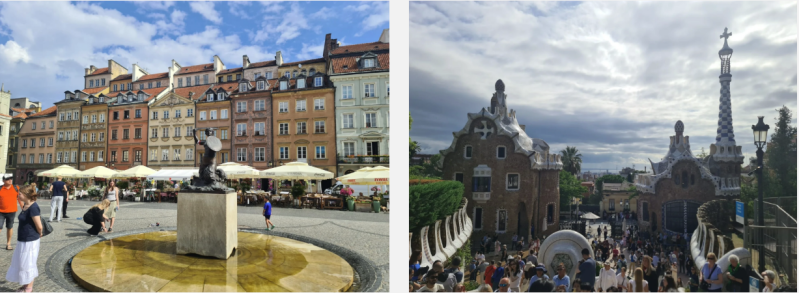
"To leave is to die a little..." goes a famous saying. But traveling is above all an indispensable tool for closely observing the urban and economic dynamics that are transforming European cities. ✈️🌍
This year I had the opportunity to visit two iconic capitals of contemporary Europe, deeply different in their vision and development model: Warsaw and Barcelona.
The contrast is emblematic.
On one side is Warsaw, a city that managed to rise from its ashes, projecting itself into the future with extraordinary determination. Beyond its historical reconstruction, it has developed a cutting-edge financial district characterized by an imposing skyline that attracts major corporate giants and multinationals—turning them into engines for investment with a business dynamism very reminiscent of the London model. 🇵🇱🏙️
On the other side is Barcelona, a metropolis rich in charm, culture, and global tourist appeal, which now faces the complex repercussions of gentrification: strong upward pressure on rents, a shrinking supply of residential housing, and a growing segment of the population struggling to afford the cost of living. 🇪🇸🎨
Observing these two models inevitably prompts a reflection on our own Catania.
A city with extraordinary potential that repeatedly demonstrates the desire to renew itself and attract development, yet often remains entangled in structural challenges that slow its growth. The risk is remaining anchored in the past, seeing the momentum hindered from making that definitive leap in quality that the region truly deserves.
Dario Sciacca
Add comment
Comments