You buy it to enjoy the summer. Then condo fees, sea salt, maintenance, and the months you don't use it arrive. And what seemed like an opportunity could turn into a much more demanding expense than expected.
Buying a beach house is a dream for many people. Just imagine a terrace, the sound of the waves, outdoor dinners, and the ability to reach the beach without having to organize a vacation every single time.
In Sicily, especially along the Ionian coast between Riposto, Fondachello, and Mascali, this desire is particularly understandable.
But there is a question you should ask yourself before signing: are you buying a real estate investment or a lifestyle that will carry an annual cost?
Because the two things are not necessarily the same.
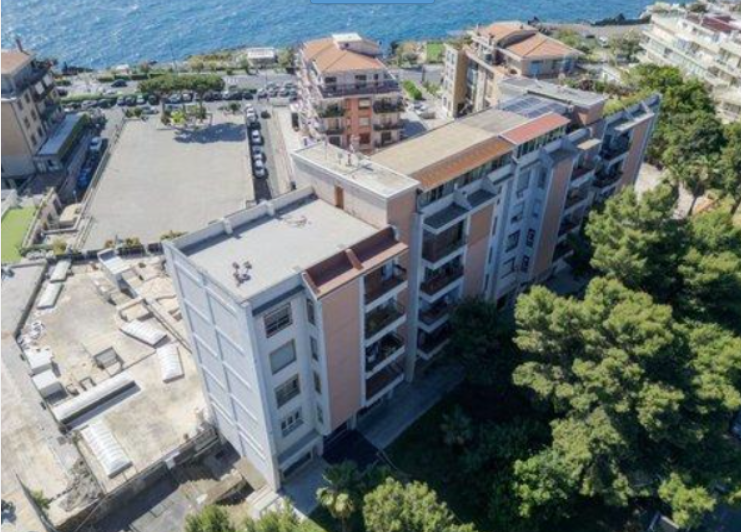
The First Uncomfortable Truth: The Purchase Price is Only the Beginning
When visiting a seaside property, attention almost always focuses on the prettiest features: proximity to the beach, the balcony, the view, the natural light, and the outdoor spaces.
Much less attention is paid to what happens after the closing.
Beyond the purchase price, you must consider taxes, acquisition costs, potential financing fees, utilities, condo fees, routine maintenance, and extraordinary repairs.
If the apartment is located in a building with an elevator, common areas, facades needing restoration, or systems requiring upgrades, costs can differ significantly compared to a small independent property.
And beware: even a home used for only a few weeks a year continues to incur expenses.
No matter how many times you open the front door: expenses do not go on vacation.
The Second Uncomfortable Truth: The Sea is Wonderful, But Sea Salt Shows No Mercy
Anyone living near the coast knows the problem well.
The marine environment can accelerate the deterioration of exposed materials and components, especially when maintenance is neglected.
Window frames, railings, shutters, metal elements, fixtures, and external parts may require more frequent inspections and interventions depending on their exposure and materials.
Facades and common building areas also deserve attention.
This does not mean every home near the sea is destined to degrade rapidly. It means that before buying, it is essential to verify the actual condition of the property and the building.
A rusty railing might be an isolated issue. A damaged facade or extraordinary work on common areas can lead to far more significant costs.
That is why, during a viewing, you shouldn't just look at the view. Look at what might require maintenance.
The Third Uncomfortable Truth: A Beach House is Not Automatically a Rental Income Source
It is one of the most common mistakes: buying an apartment thinking you will rent it out to tourists and easily recover all expenses.
On paper, the logic seems simple.
The owner uses the house during their holidays and rents it out the rest of the time. The revenue helps cover costs and maybe yields a profit.
In reality, however, you have to factor in actual demand, seasonality, competition, and the price tourists are willing to pay.
An apartment near the beach is not necessarily booked for the entire summer. And gross earnings are not net profits.
From revenue, depending on the management model, you must deduct cleaning fees, utilities, maintenance, platform commissions, management costs, taxes, and vacant periods.
Before buying for investment purposes, it is wise to prepare a conservative estimate of income and expenses.
Additionally, for short-term and holiday rentals, you must check applicable compliance rules, including the National Identification Code (CIN), safety requirements, and administrative obligations. The Ministry of Tourism provides official guidelines on its dedicated CIN and BDSR page.
Simply posting an online listing is not enough to be ready to host guests.
The Fourth Uncomfortable Truth: How Much Does It Really Cost to Keep It Closed?
Imagine buying a seaside home and using it only in June, July, and August.
For the rest of the year, the apartment sits empty.
Meanwhile, condo fees, property taxes, insurance, maintenance, periodic checks, and minimum utility charges continue, alongside any financing costs.
This is not necessarily a wrong choice. If the home allows you to enjoy family vacations and brings personal joy, its value isn't measured solely in money.
The problem arises when the purchase is justified as a profitable investment without calculating holding costs.
A second home can be an excellent lifestyle choice and, simultaneously, a poor financial investment.
Both can be true at the same time.
The Fifth Uncomfortable Truth: A Sea View Doesn't Solve Every Problem
An apartment with a sea view can be extremely attractive. But how much is that view really worth if the building needs work, access is inconvenient, or parking and amenities are lacking?
A property's value depends on a complete set of features.
Before buying, check:
- Actual distance to the beach and ease of access.
- Condition of facades, roof, and common areas.
- Presence of humidity, leaks, or signs of corrosion.
- Condo fees and any approved future works.
- Parking availability and year-round local amenities.
- Urban planning compliance, land registry status, and utility systems.
An apartment with a less spectacular view that is well-maintained may suit your needs better than a picturesque property that is expensive to manage.
Beauty matters. But it shouldn't be the only criteria.
The Sixth Uncomfortable Truth: When You Resell, the Market Won't Automatically Refund Your Expenses
Did you buy ten years ago? Did you replace the windows, renovate the bathroom, and pay condo fees for years?
None of this guarantees you will sell at a price that recovers every euro spent.
Resale value depends on demand, location, property condition, and market trends at the time you decide to sell.
Maintenance costs are often necessary to preserve functionality, but they don't always translate into an equivalent price increase.
Therefore, second-home buyers should distinguish early on between the personal value of the property and its expected financial return.
If you buy to enjoy it, the main benefit might simply be the time spent there.
If you buy to invest, analyze the numbers, costs, and resale scenarios without assuming future capital appreciation.
So, Is Buying a Beach House Worth It?
There is no one-size-fits-all answer.
It can be a great choice for those seeking a frequently used second home, with an adequate budget and sustainable management costs.
It can also be interesting for those looking to generate rental income, provided they carefully analyze local demand, expenses, and regulatory obligations.
Conversely, it can become a burden for those relying on uncertain tourist revenue, underestimating maintenance, or overextending financially.
The difference isn't made by distance to the sea alone. It is determined by property condition, purchase price, annual costs, and your core motivation.
The Uncomfortable Question You Should Ask Before Signing
If tomorrow you couldn't rent the house out for even a single week, could you comfortably afford to keep it?
If the answer is yes, you are likely buying a place to live in and enjoy.
If the answer is no, it might be time to redo your calculations before committing.
A beach house can offer wonderful memories. But a mindful purchase begins when you stop looking only at the view and start looking at the balance sheet.
Looking to Buy a Beach House in Eastern Sicily?
Domus Sicilia Immobiliare – Dimore e Terreni guides you in finding properties between Riposto, Fondachello, Mascali, and other Ionian coast locations, helping you evaluate key features before buying.
Visit our website: [https://dsimmobiliare.it](https://dsimmobiliare.it)
The right home isn't just the one you fall in love with at first sight. It is the one you can enjoy, maintain, and manage with peace of mind.
General informative article. Costs, yields, and viability must be evaluated on a case-by-case basis. Rental yield or future appreciation is not guaranteed.
Add comment
Comments