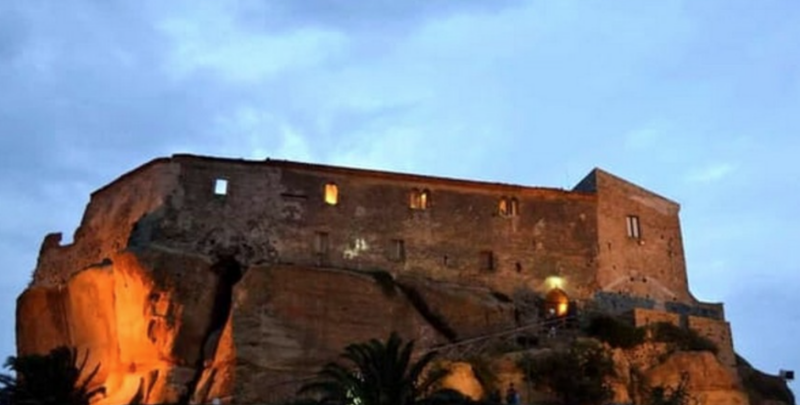
Welcome back to our weekly journey through the fortifications and history of the Etna region. After admiring the splendid panorama of the Alcantara Valley from Calatabiano Castle, for Chapter 8 we head upstream to discover a village that looks straight out of a medieval fairy tale: Castiglione di Sicilia.
8. The Castle of Castiglione di Sicilia (Castel Lauria): The Stone Bastion Over the Valley
Perched on an impressive spur of sandstone and limestone rock overlooking the Alcantara River gorge and the vineyards producing the famed Etna DOC wine, the village of Castiglione di Sicilia guards an extraordinary historical heritage, dominated by the stern silhouette of its medieval stronghold, historically known also as Castel Lauria.
History: An Unconquerable Stronghold in the Mountains
The strategic location of Castiglione did not escape past rulers. As early as the Byzantine and later Arab eras, this rocky massif was chosen as a defensive stronghold. With the arrival of the Normans, and subsequently during the Swabian and Aragonese periods, the fortress assumed a top-tier political and military role.
The castle owes much of its medieval fame to Roger of Lauria, the legendary admiral of the Aragonese fleet who in the 13th century lived in and governed these territories during the Sicilian Vespers. The stronghold represented a vital control point for the security of the valley, capable of withstanding long sieges thanks to its natural structure, which made it virtually impossible to storm directly.
Architecture and the Surrounding Village
The fortified complex and the remnants of the castle merge harmoniously with the rock on which they stand:
-
The ruins and towers: Although time and earthquakes have left their mark on the structure, the remnants of the perimeter walls, guard towers, and rock-carved rooms bear witness to the original grandeur of the defensive complex.
-
The setting: Visiting the castle also means getting lost in the narrow streets of Castiglione di Sicilia's historic center (listed among the most beautiful villages in Italy), characterized by Norman churches, noble palaces built in lava stone, and breathtaking views of the volcano.
Practical Information for Visitors
If you want to organize a trip to explore this splendid village and its fortress, here is some useful information:
-
What it houses today: The remnants of the castle and Castel Lauria can be visited while strolling through the historic center and climbing toward the summit of the rock, which offers an extraordinary natural panoramic terrace overlooking the Alcantara Valley and its terraced vineyards.
-
Opening hours: As a monumental area embedded within the urban fabric of the village, access to the viewpoints and climbing paths is open, while checking with the local tourist office is recommended for any internal exhibition spaces or guided events.
-
Practical advice: Wear comfortable shoes with good grip: the streets of the old village and the climb toward the rock feature inclines and traditional stone paving.
A chapter that blends the grand maritime and military history of Sicily with one of the most beautiful rural and wine-producing landscapes in Europe.
Next Monday our series will head toward its conclusion with Chapter 9: get ready for another unmissable dive into the history of our island!
Add comment
Comments