Walking through the villages of Mount Etna or the countryside of the Catania province, it’s easy to fall in love with an old lava stone depot or an agricultural warehouse surrounded by citrus groves. Many dream of transforming these structures into unique residences or cozy holiday homes.
But be careful: a warehouse is not a home. To make it one, you must navigate the process of a Change of Use. At Domus Sicilia | Dimore e Terreni, we have prepared this guide to help you understand the feasibility, costs, and advantages of this transformation.
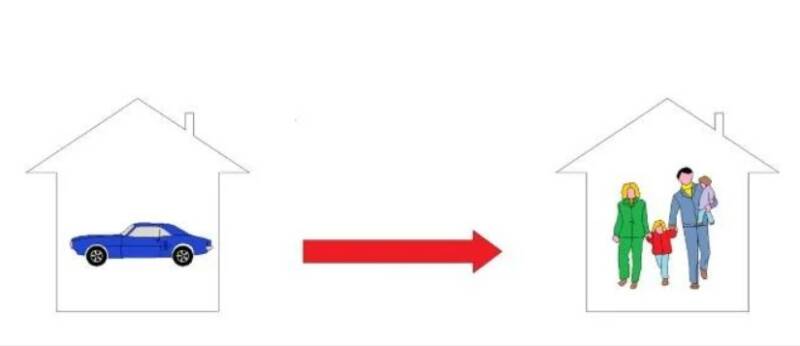
What is the "Destinazione d’Uso" (Intended Use)?
Every property has a legal and fiscal "identity" established by the Land Registry (Catasto) and the Municipality. A property can be residential (Cat. A), commercial (Cat. C/1), storage (Cat. C/2), or agricultural. Changing the intended use means altering this identity to allow a different use from the original one.
1. The First Step: The General Regulatory Plan (PRG)
Not all warehouses can become homes. The first step is to consult the specific municipal regulations (e.g., Nicolosi, Viagrande, Zafferana Etnea).
-
Homogeneous Zones: If the warehouse is located in an agricultural area, the change may be restricted or tied to specific requirements (such as the size of the surrounding land).
-
Building Ratios: It is essential to verify if the existing volume is compatible with the residential parameters of the area.
2. Change with or without Construction Works?
-
Without Works: If the property is already structurally suitable and requires no building interventions (a rare case for rural warehouses).
-
With Works: This is the most frequent scenario. To transform a depot into a home, you must install systems (water, electricity, sewage), create bathrooms, and ensure aero-illumination ratios (the correct proportion between window area and floor space). In this case, a Building Permit (Permesso di Costruire) or a SCIA is required.
3. The Costs: Urbanization Fees
Changing the intended use involves a "cost" payable to the Municipality. Since a residence places more demand on public services (roads, lighting, sewers) than a warehouse, you must pay urbanization fees and a construction cost contribution. In Sicily, these figures vary from one municipality to another and depend on the square footage of the property.
4. The Essential Requirement: Habitability (Agibilità)
The final goal of the change of use is obtaining the Certificate of Habitability (Agibilità). To achieve this, the property must meet:
-
Minimum Heights: Generally 2.70 meters for main rooms.
-
Minimum Surfaces: For example, at least 9 sqm for a single bedroom or 14 sqm for a double.
-
Insulation and Safety: Compliance with anti-seismic regulations and thermal insulation standards.
Why is it worth doing in Sicily?
Purchasing a property in category C/2 (warehouse) or C/6 (stable/garage) often comes with a much lower price tag than a ready-to-move-in house. Even when adding the costs of renovation and municipal fees, the final value of the transformed property is often significantly higher than the total investment—especially if you focus on high-end finishes and the restoration of original materials like Sicilian terracotta or lava stone.
The Domus Sicilia Verdict
Changing the intended use is an excellent investment strategy, but it must be carefully planned before the purchase. A preliminary check prevents you from buying a warehouse that, due to landscape or urban planning constraints, can never legally become a home.
Have you found a "rustico" or an agricultural warehouse that you’d like to transform into your next home? Contact us for a technical inspection. At Domus Sicilia, we will help you evaluate the real potential of the property and the feasibility of your transformation project.
Add comment
Comments