After analyzing cadastral categories, it is essential to understand how a property can "evolve." Moving from residential to commercial use — or the reverse — is a strategic operation that can drastically increase investment value, but it requires regulatory precision.
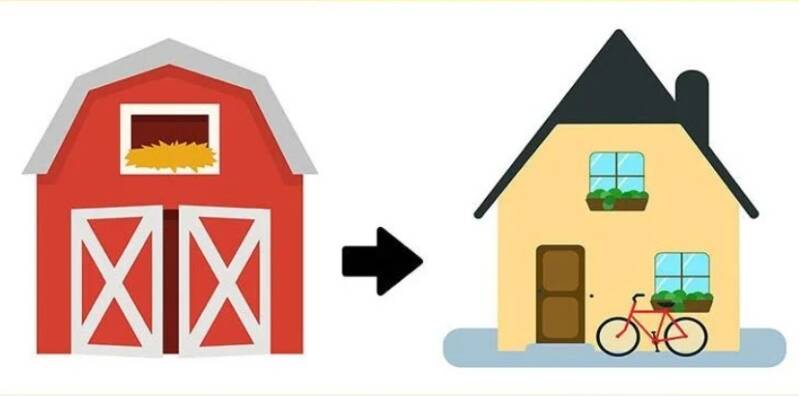
What is a Change of Intended Use?
Every property has a specific function assigned by the Municipality and the Land Registry. Changing this function means modifying how the unit is used. There are two types of changes:
-
With works: If construction work is needed (e.g., knocking down walls, new systems).
-
Without works: If the change is purely functional.
1. From Residential (Cat. A) to Shop/Store (Cat. C/1)
This transformation is common for those wishing to capitalize on a ground-floor unit in a high-traffic area.
-
Requirements: The property must comply with accessibility regulations (removal of architectural barriers) and health and hygiene parameters for premises open to the public.
-
Advantage: A ground-floor residential property often yields much higher returns if leased as a commercial activity.
2. From Shop (Cat. C/1) to Residential (Cat. A)
Currently in high demand for creating lofts or extra-hotel accommodation facilities. The Habitability Challenge: This is the most complex transition. One must guarantee:
-
Minimum Heights: Usually 2.70 meters for main rooms.
-
Aero-illuminant Ratios: The window surface must be proportional to the floor area (generally 1/8).
-
Minimum Surfaces: A studio apartment must meet a minimum square footage defined by ministerial decree (e.g., 28 sqm for one person).
The 3 Pillars of Regularity
To complete the transition successfully, action must be taken on three fronts:
-
Urban Planning: Verification of compliance with the Municipality's General Regulatory Plan (PRG). The change is not always permitted in certain historic or residential zones.
-
Condominium: It is vital to consult the Condominium Regulations. If the latter expressly prohibits commercial activities or partitioning, the change could be legally blocked.
-
Cadastral: Once municipal permits (SCIA or Building Permit) are obtained, the floor plan and category must be updated at the Land Registry for correct taxation.
Domus Sicilia’s Advice: "Before purchasing a property with the idea of transforming it, always request a technical feasibility report. It is not enough for a place to 'look' suitable to become a home or a shop: it must be legally able to become one to avoid owning an unsellable property or one lacking a certificate of occupancy."
Add comment
Comments