Many owners view the cadastral category as a mere bureaucratic detail. In reality, it is the engine that drives taxation and, consequently, influences the sale price and the desirability of a property. In this article, we will look at how a simple letter (A, B, C...) can radically change the economics of a real estate investment.
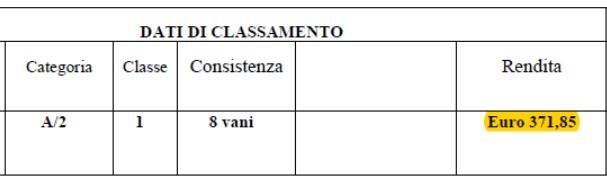
1. Cadastral Income (Rendita Catastale): The foundation of everything The "rendita" is the value that the tax authorities assign to your property. The higher the category (for example, A/1, luxury property, compared to A/3, economic housing), the higher the cadastral income. Why does this matter? Because this value is used to calculate:
-
IMU (Property Tax): If the property is not your primary residence.
-
Registration Tax: Paid when purchasing from a private individual.
-
TARI (Waste Tax): Often influenced by square footage and the intended use of the property.
2. The impact on transaction taxes If you are selling a house, be aware that a savvy buyer will immediately check the category. If the property is classified as A/1 (Luxury/Stately), A/8 (Villas), or A/9 (Castles), it is considered a luxury home. This means:
-
No "First Home" benefits: The buyer will not be able to benefit from the reduced 2% registration tax but must pay 9% instead.
-
No IMU exemption: Even if the buyer moves their official residence there, they will continue to pay IMU as a second home.
3. Cadastral Category and Market Value There is often a paradox: beautiful properties with low cadastral categories (perhaps an A/4, popular housing, because it was never updated after a renovation) and modest properties with high categories.
-
For Sellers: Having a category consistent with the actual state of the property protects against disputes regarding the "price-value" and ensures a smooth sale.
-
For Buyers: A "generous" category (such as an A/3 compared to an A/2) can mean consistent tax savings over time.
4. The risk of reclassification Renovating a house can lead to an update of the category. If you add a second bathroom or knock down walls to create a double living room, the Revenue Agency may require a move to a higher category. Conversely, in specific and documented cases, it is possible to request a downgrade if the property has lost its prestige or if the area has declined, thereby lowering the tax burden.
Advice from Domus Sicilia "Never underestimate the cadastral survey (visura) before putting a property on the market. Knowing exactly how much IMU or registration tax will weigh on the future buyer is a fundamental sales leverage. At Domus Sicilia, we analyze the cadastral income of every property to advise on the right price and the best fiscal strategy.
Add comment
Comments