There is a magnetic charm in old stone structures, abandoned farmhouses, or forgotten "bassi" (ground-floor dwellings). For many, they are just piles of rubble, but for a forward-thinking investor or someone dreaming of a unique home, they represent a blank canvas.
As we discussed when talking about Category F/2 (Dilapidated Units), these properties have a peculiarity: they produce no tax yield and are often in a state of decay. But it is precisely here that the best opportunities are hidden.
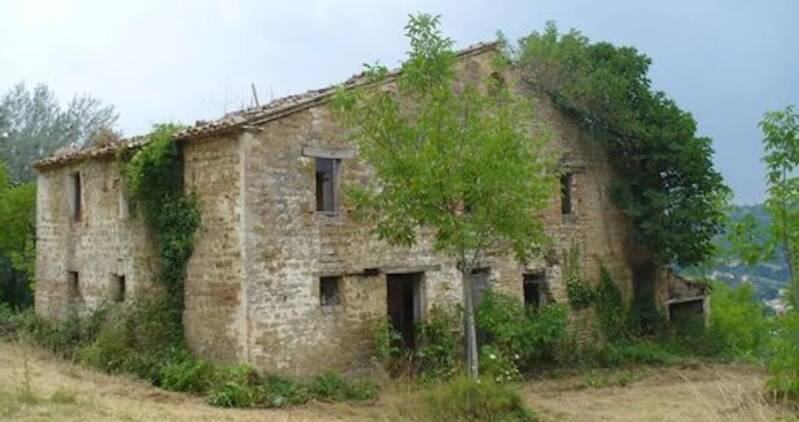
Why invest in a ruin?
-
Total Customization: Unlike a ready-made house, here you can design spaces from scratch, blending historical character (dry stone walls, arches, vaults) with modern comfort (home automation, large windows, thermal insulation).
-
Tax Incentives: The recovery of a dilapidated unit fully qualifies for building bonuses. Renovating a ruin allows you to deduct a large part of the expenses, making the investment much more sustainable compared to buying "new."
-
The Value of History: A renovated historical residence will always have a higher market value and a charm that no new construction can ever replicate.
Key steps for success Restoration is not a path to be improvised. Here is how to proceed based on Domus Sicilia’s experience:
-
Verification of Volume (Cubatura): The first step is understanding how much surface area can actually be recovered. In many cases, it is possible to maintain the existing volume and sometimes take advantage of small extensions provided by regional or local regulations.
-
Consolidation and Structure: Since these are dilapidated units, safety is the priority. The project must include the consolidation of foundations and load-bearing walls. Often, the beauty lies in leaving the stone exposed, treating it to preserve its integrity.
-
Change of Category: Once works are completed, the property will move from Category F/2 to the final residential category (usually A/2 or A/7 for villas). From that moment, the house will acquire its cadastral yield and full occupancy permit.
Domus Sicilia’s Advice "Don't buy a ruin only with your heart. Bring a technician and your real estate consultant with you to evaluate the feasibility of the project. A dilapidated unit can be the deal of a lifetime or a bottomless pit: the difference lies in the initial planning."
Transforming Land with a Ruin into a "Dimora" For us at Domus Sicilia, the term "Dimore e Terreni" (Residences and Lands) means exactly this: giving new life to the territory. If your dream is a farmhouse surrounded by greenery or a historical residence in a village, the starting point is often a Category F/2.
Add comment
Comments