The real estate market revolving around Mount Etna is not just about houses, villas, and palmenti (traditional wineries). Increasingly, investors, local entrepreneurs, and wine tourism enthusiasts are looking with great interest at another extraordinary asset of our territory: agricultural land. Volcanic soil is among the most fertile, rich, and commercially coveted in Italy. However, purchasing farmland in this area—especially in high-vocational wine regions like Piedimonte Etneo and the neighboring municipalities of the Ionian-Etna strip—requires highly specific technical and bureaucratic expertise. This is not a simple real estate transaction, but a genuine analysis of agricultural productivity and compliance. Here are the fundamental aspects to consider before investing in Etna farmland.
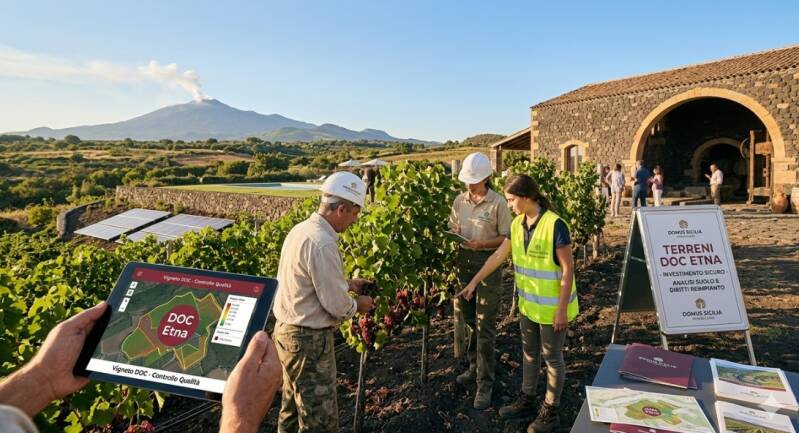
1. Etna's "Black Gold": Soil Quality The primary value of land in this area lies in its soil, often called "black gold" due to its color and incredible fertility. The Etna soil is the result of millennia of lava stratifications, basalt weathering, and eruptions that have enriched the land with unique minerals such as potassium, phosphorus, magnesium, and iron. Added to this is an extraordinary microclimate: strong temperature fluctuations between day and night and constant ventilation that protects crops from diseases. This makes the land perfect not only for famous historical vineyards but also for olive groves, orchards, and high-quality crops. Evaluating the composition, slope, and exposure of the soil is the first step to understanding which crop will perform best on that property.
2. Understanding Replanting Rights and DOC Etna Quotas If your goal is to plant a vineyard or expand existing production, viticultural bureaucracy is at the heart of the operation. In Europe, and Italy in particular, you cannot plant a vineyard freely: every square meter of a vineyard must be authorized by "replanting rights" (or authorizations). When evaluating the purchase of agricultural land, you must verify:
-
Whether there are already registered and producing vineyards on the land.
-
Whether the property is sold including the replanting rights as part of the corporate portfolio.
-
Whether the land falls perfectly within the DOC Etna production regulations, a designation that today guarantees a very high market value for the produced bottles. Buying land without verifying the ownership and expiration of these quotas can jeopardize your entire investment plan.
3. Essential Water and Boundary Checks Fertile land has limited value if not supported by the right water resources. Before signing a preliminary sales agreement, a technical due diligence on the property is essential:
-
Water supply: Are there officially registered artisan wells on the land? Are there water rights or irrigation consortium shares?
-
Boundary verification: In agricultural and mountainous areas, cadastral boundaries often do not perfectly match the existing dry-stone walls or fences. A field survey with topographical equipment avoids unpleasant disputes with neighbors.
-
Easements and constraints: Presence of conduits, drainage channels, active or passive rights of way, or restrictions imposed by the Forestry Department and the Etna Park Authority.
Why Targeted Technical and Agrarian Consulting is Necessary To navigate this sector safely, classic real estate brokerage is not enough. You need a professional figure who knows how to read regional vineyard registers, analyze water ownership titles, and understand the agronomic state of the soil. At Domus Sicilia Immobiliare, we combine real estate brokerage expertise with solid, qualified technical and agrarian consulting. We are able to analyze the actual productivity of the land, verify the regularity of all quotas and agricultural rights, and guide you toward a secure investment, whether you want to start a boutique winery or are looking for land to pair with a historic residence. The land of Mount Etna offers extraordinary opportunities, provided you know how to read the rules. Are you looking for the ideal land for your agricultural or viticultural project? Contact Domus Sicilia Immobiliare for personalized technical consulting.
Add comment
Comments