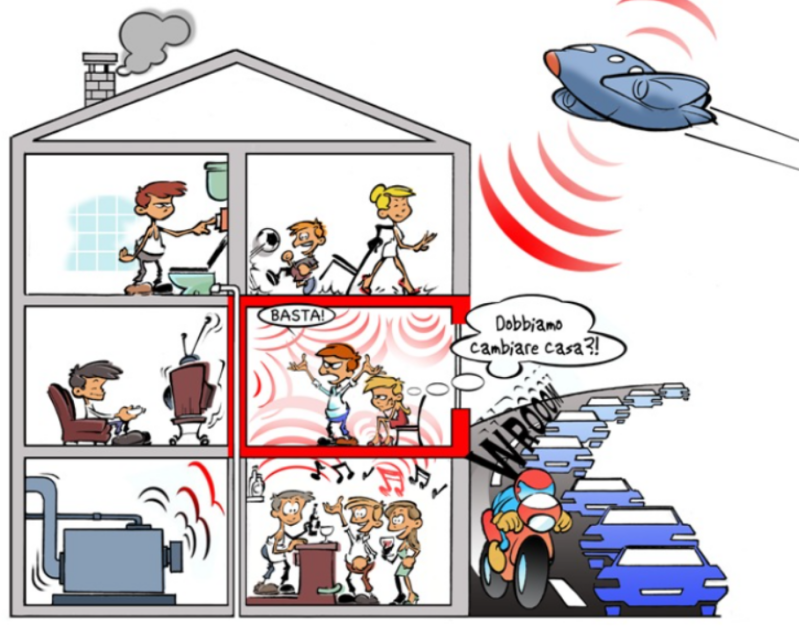
Living in a condominium often brings moments of tension, and the number one bone of contention is almost always the same: annoying noises. Whether it's heavy heels echoing from the floor above, loud music, endless renovations, or a dog barking all day long, domestic peace is a treasure as precious as it is difficult to protect.
We at Domus Sicilia Immobiliare know very well how much living serenity influences the value and the pleasure of experiencing a home. For this reason, we have prepared a practical guide to navigate condominium regulations, the Civil Code, and common sense.
1. What the Law Establishes (Civil and Penal Code)
Even before internal regulations, general rules apply to everyone:
-
Article 844 of the Civil Code: Establishes the fundamental limit of "normal tolerability." Noises cannot be completely banned, but they must not exceed the threshold that the average person living in that environment can tolerate. A judge evaluates cases individually, taking into account the location (for example, in a tourist or central area, a bit more noise is tolerated compared to an isolated residential context).
-
Articles 650 and 659 of the Penal Code: Intervene in the most serious cases, constituting the disturbance of people's occupations or rest. If a noise bothers a plurality of people (and not just the neighbor next door), one even risks criminal penalties.
2. The Condominium Regulation: Internal Rules
Each condominium has its own regulation (often contractual, attached to purchase deeds). This document can be stricter than general law, but can never be less severe.
The most common clauses concern:
-
Quiet hours: Usually scheduled from 2:00 PM to 4:00 PM and from 10:00 PM to 8:00 AM the following morning. During these hours, making annoying noises (washing machines, vacuums, moving furniture) is strictly prohibited.
-
Renovation work: Regulations establish which days and hours are allowed for operating drills or demolition tools (usually only on weekdays, excluding holidays and Saturday afternoons).
-
Pets: Regulations cannot ban keeping pets at home in any way (thanks to the condominium reform), but they can penalize poor management if they cause continuous and unjustified noises (e.g., nighttime barking).
3. How to Behave in Case of Condominium Disputes
If the situation becomes unsustainable, it is important to proceed gradually to avoid permanently compromising neighborhood relations:
-
Direct dialogue: Often the neighbor doesn't realize the disturbance they are causing. A civil and peaceful conversation solves 80% of problems.
-
Written report (Administrator): If dialogue fails, a formal communication can be sent to the condominium administrator so they can call out the unruly resident for respecting the rules.
-
Mediation and legal action: In extreme cases, before resorting to a judge, civil mediation is mandatory. It is helpful to gather objective evidence (sound level meter recordings, testimonies from other residents).
Need advice on managing your condominium or looking for a new home where tranquility reigns? Come visit us at the Domus Sicilia Immobiliare offices: our experience is at your service.
Add comment
Comments