Welcome back to our weekly journey through the fortifications and history of the Etna region. After exploring the stern majesty of the manor of Paternò, for this Chapter 4 we head a little further north, following the course of the Simeto River to the gates of the Etna Park.
Get ready to discover the majestic Norman Castle of Adrano, an imposing fortified tower that encapsulates centuries of history, archaeology, and traditions.
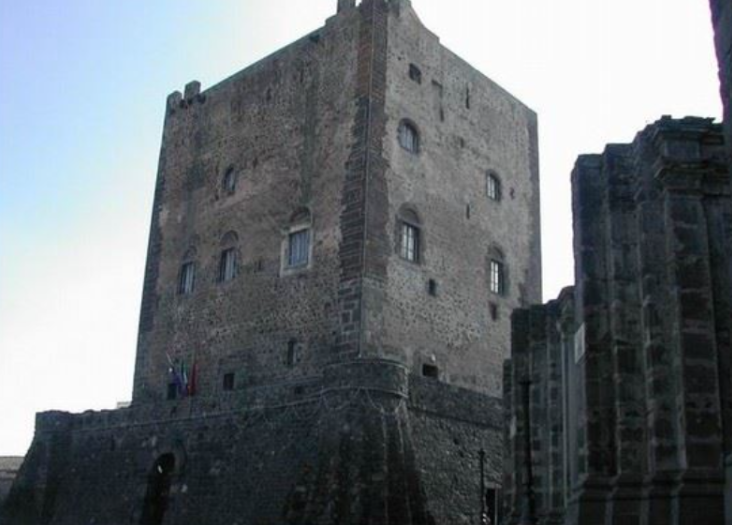
4. Norman Castle of Adrano: The Lava Stone Giant Guarding History Imposing and geometric, the Norman Castle of Adrano dominates the town of the same name with its severe silhouette made of dark blocks of lava stone. At first glance, its structural similarity to the castle of Paternò is evident: it is indeed one of the major defensive works commissioned by the Hauteville family to reorganize the military and economic control of the territory after the expulsion of the Arabs.
History: From Norman Fortress to Cultural Hub The foundation of the stronghold dates back to the last decade of the 11th century (around 1090) at the behest of Count Roger. Its location was not accidental: Adrano stood at a strategic crossroads between Etna and the Nebrodi mountains, a vital hub for communications and trade at the time. Over the centuries, the castle changed its appearance and use multiple times. In the 16th century, with the arrival of the noble Moncada family (counts of Adrano), the structure underwent major modifications to make it more suitable for residential needs of the period, while maintaining its original appearance as a solid fortress. Later, it was also used as a Bourbon prison before being acquired and restored to become the cultural heart of the city.
Architecture and the View of the Volcano The castle features a massive rectangular plan and is divided into three large floors:
-
The division of spaces: The ground floor and basements were used as cisterns and storage rooms; the noble floor hosted the reception halls and the chapel; the top level was dedicated to the guards and defense.
-
The panoramic terrace: From the top of the castle, visitors enjoy an extraordinary view ranging from the woods of Etna to the gorges and the valley below, offering a unique perspective on the symbiotic relationship between the volcano and human settlements.
Practical Information for Your Visit If you want to organize a visit to discover this splendid manor, here is what you need to know:
-
What it houses today: The castle is home to the Adrano Civic Archaeological Museum. Inside is an extraordinary collection of artifacts telling the story of the territory from prehistory to the Greek and Roman eras (including important testimonies of the ancient city of Adranon), alongside sections dedicated to sacred art, a pinacotheca, and folk traditions.
-
Opening hours: Generally open from Tuesday to Sunday, during daytime hours (it is advisable to check in advance for any holiday or seasonal variations through municipal tourism channels).
-
Tickets: An economical admission ticket is available, which includes the complete visit to the museum and the historical rooms of the castle.
-
Practical tips: It overlooks Adrano's main square (Piazza Umberto I), making the visit easily accessible and perfect to combine with a stroll through the historic center.
A chapter that unites millennial archaeology with the power of Norman architecture. Next Monday our column will continue with Chapter 5: get ready for a truly unique temporal and geographical leap, at the foot of a volcano and a river that hold stories of admirals and abbeys...
Add comment
Comments