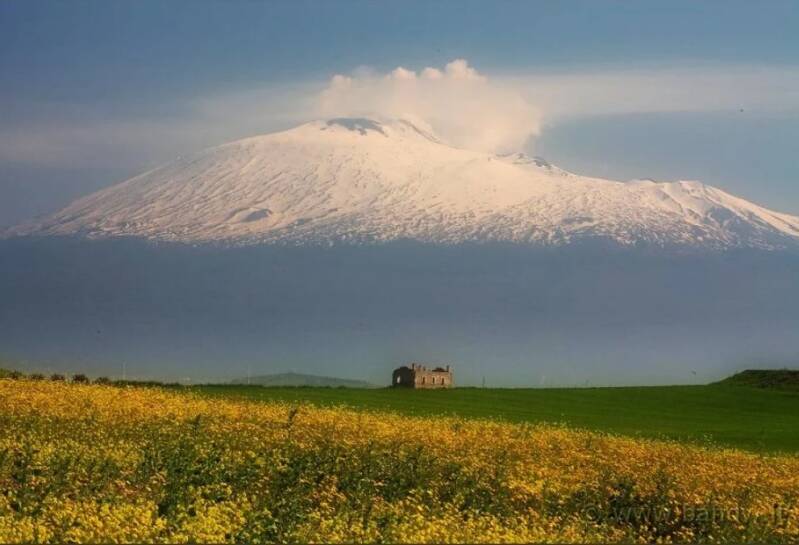
When we think of the Catania Plain, our minds immediately turn to the endless citrus groves, the majestic profile of Mount Etna in the background, and the agricultural estates that define the productive heart of our land. However, there exists a real estate and architectural heritage suspended in time—almost unknown to traditional tourist flows—that tells a crucial chapter of the 20th century: the Fascist rural villages and the so-called "Mussolini Houses."
Born between the 1930s and 1940s, these settlements represent a unique urban planning experiment that today oscillates between the fascination of industrial archaeology, cutting-edge tourism, and new opportunities for redevelopment.
The "Battle for the Latifundia" and the Birth of the Villages
In 1939, with the establishment of the Ente per la Colonizzazione del Latifondo Siciliano (Board for the Colonization of the Sicilian Latifundia), the Fascist regime launched a monumental plan to depopulate cities and "colonize" the internal and isolated areas of Sicily. The goal? To transform vast tracts of uncultivated land into productive fields.
To achieve this, the hands of farmers were not enough; infrastructure was needed. Thus, rural villages were born. They were not designed as true towns for permanent residence, but as actual "service centers." Inside them were a church, an elementary school, a Carabinieri barracks, a post office, the local podestà office, and an artisan’s workshop. Surrounding these nuclei were the farmhouses, entrusted to the families who worked the land.
The Jewels (and Ghosts) of the Catania Plain
If you venture into the territory connecting Catania, Paternò, Ramacca, and Mineo, you can encounter these structures with an unmistakable design: rationalist lines, clean geometries, stark arches, and the use of local materials like lava stone or tuff.
Here are the three most iconic and evocative sites in the Plain:
-
Borgo Pietro Lupo (Mineo): Perhaps the most famous village in the province of Catania. Dedicated to Captain Pietro Lupo, it presents itself as a true metaphysical parade ground. The architecture is a perfect example of Italian rationalism. In recent years, it has been at the center of funding projects by the Sicilian Region for its safety and cultural-touristic redevelopment. Walking here feels like being inside a painting by Giorgio de Chirico.
-
Borgo Sferro (Paternò): Linked inextricably to the history of the Second World War. In 1943, the area around Borgo Sferro was the theater of a bloody battle between Allied troops and Italian-German forces. Today the village, while maintaining its original structure with the railway station and the church, speaks of the silence of the countryside and the partial abandonment that characterizes many of these sites.
-
Libertinia (Ramacca): Not far away, in the territory of Ramacca, lies Libertinia. Unlike other villages that have remained completely uninhabited, Libertinia has maintained a very small community of residents over time. Its central structure, with the large square, represents an authentic cross-section of what rural life, as planned eighty years ago, must have been like.
What Future for Rural Real Estate?
From a strictly real estate and territorial development perspective, these villages and the related roadmen’s houses or farmhouses scattered across the Plain represent a complex heritage rich in potential.
Increasingly, investors—both Italian and foreign—look at the rural structures of inland Sicily no longer as "ruins to be forgotten," but as spaces to be converted into:
-
Charming accommodation or "Alberghi Diffusi": Ideal for the experiential and rural tourism that is currently growing strongly.
-
Cultural or immersive smart-working centers: Where the quiet of the countryside meets architectural history.
-
Cutting-edge agricultural and agritourism businesses: Valorizing the excellent products of the Plain (such as the PGI Red Orange of Sicily).
The charm of the stone, the strategic proximity to Catania and highway nodes, and the regenerating isolation make the architecture of the Plain a real estate frontier waiting to be rediscovered.
Domus Sicilia advises: If you love history and want to discover a different side of Sicily, organize an "on the road" weekend in the Catania Plain in search of these villages. You will be surprised by the raw, timeless beauty of these places.
If you want to sell, buy, or enhance a historic property or rural estate in the Catania Plain, the Domus Sicilia Immobiliare team is by your side to guide you with competence and passion. Contact us for a consultation!
Add comment
Comments